Character Movement in Top-Down Tile-Based Games
By DUCK_BERET
October 10, 2024
I've always had a soft spot for top-down action games that take place on a tile grid, whether it's pure action games like Pocky & Rocky or action-puzzle games like Bomberman or Pengo.
There are a few different ways ways that character movement can work in these games, each with their own advantages and disadvantages. I put way too much thought about this while designing Chessplosion and my upcoming tile-based bump combat action game, so here's a quick rundown of the most common ways of handling movement in these types of games. I'll go through how they work, their advantages and disadvantages, which games use them, and when I personally recommend using them.
1. Pure grid-based movement
Tap or hold a direction to move to the next tile. Once you start moving, you can't stop until you reach the next tile. You can visually show this as the character hopping from one tile to the next (see below), instantly teleporting to the next tile (see Mega Man Battle Network and Frogger) or as the character smoothly walking to the next tile (see the other example games).
Gameplay-wise, the movement can either be treated as an instant teleport (see Mega Ban Battle Network and Frogger) or as a smooth movement (see the other games).

Example games
- Mega Man Battle Network
- Pengo
- Frogger
- Pokémon
- Snake
- Magic Garden from UFO 50
- My game Chessplosion and my upcoming tile-based bump combat action game
Advantages
- Gives the game a very tile-based action-puzzle feel, like a real-time board game
- You always know exactly which tile you're standing on, so tile-based game mechanics are very clear as a result
- Controls feel relatively natural, even in open spaces
Disadvantages
- Feels more restricted than free movement
- You have to fully commit when moving from one tile to another, which can be a bad fit for reaction-based spacing and dodging
- You have no control over your character's movement while they're moving from one tile to the next, which can cause the controls to feel unresponsive if your character moves slowly
- Because tapping a direction makes you move all the way to the next tile, turning around on the spot usually requires its own control scheme (e.g. twin stick controls, buttons to rotate 90 degrees left and right, or a button you hold to turn on the spot)
Recommended for
Games with a heavy emphasis on tile-based mechanics, where players don't have to worry about which way their character is facing during fast-paced action sequences.
2. Free movement along grid lines
You can only move along the grid lines between tiles, but you can freely stop or turn around at any point instead of always having to move a full tile at a time. These grid lines are often invisible, so I drew them on here:
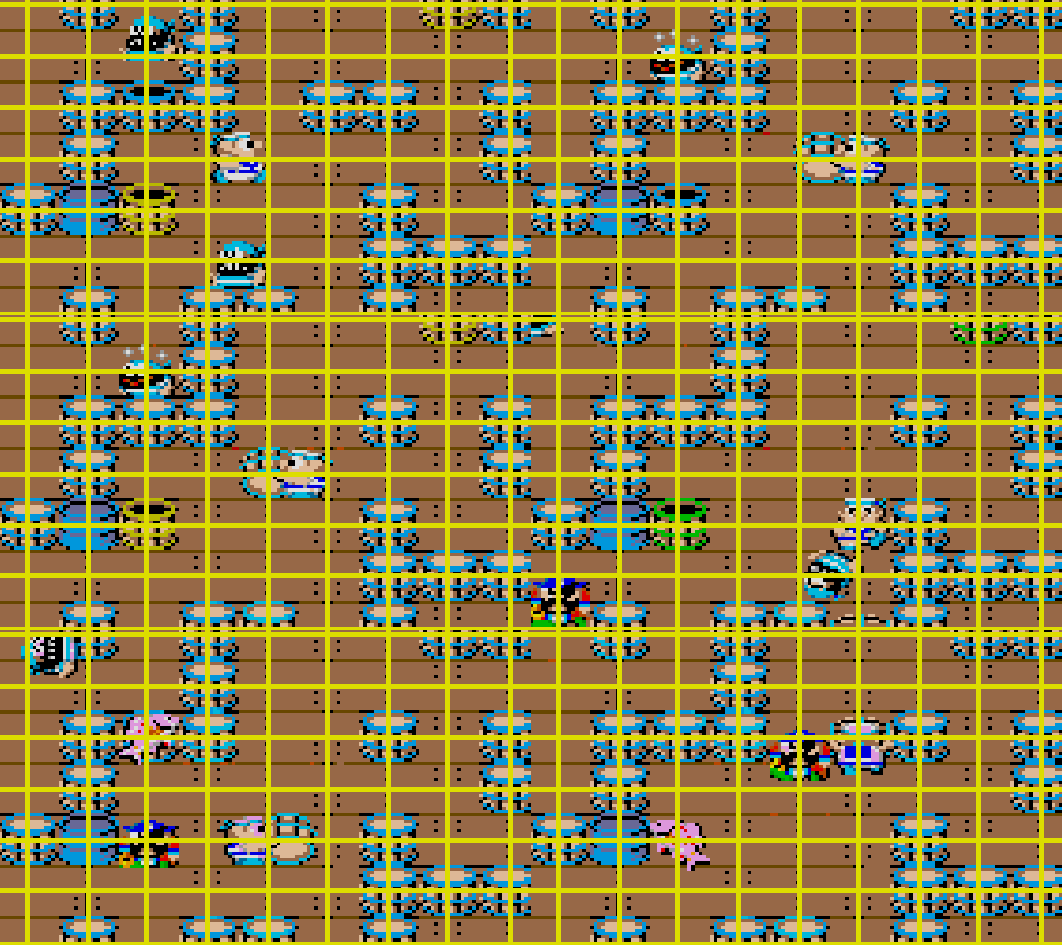
(game: Pirate Ship Higemaru)
In these kinds of games, you probably want to help players move around corners so they don't have to perfectly line themselves up with single-tile gaps. For example, if the player tries to move upwards but they're not perfectly lined up with a vertical grid line, it's probably best to move them horizontally until they're lined up with the closest vertical grid line then start moving them upwards.
Examples
- Pac-Man
- Pirate Ship Higemaru
- The Legend of Zelda 1 (has 16x16 pixel floor tiles but locks your movement to an 8x8 pixel grid)
Advantages
- Feels natural in single-tile corridors
- Lets players make short movements and quickly turn around
- Keeps you firmly on a grid line at all times in open spaces, making tile-based mechanics more clear
Disadvantages
- Can feel very strange to control in open spaces, as your movement is being snapped to invisible grid lines. This is a huge downside, and personally I recommend avoiding open spaces in these kinds of games as much as possible
Recommended for
Games with mechanics that really want to make sure you're always lined up with a specific grid line or tile, but which also want let you make short movements and change which way you're facing. Ideally you want to avoid open spaces too, by restricting players to single-tile corridors as much as you can.
3. Unrestricted free movement
You can move anywhere you want, competely off-grid. This could either be full analog movement, 8-way or 4-way movement.

(game: Pocky & Rocky Reshrined)
If your game has lots of single-tile corridors and tile-based mechanics, you can use the "free movement along grid lines" system while in a corridor, only falling back to unrestricted free movement when you're in an open space.
Examples
- Pocky & Rocky
- The Legend of Zelda series (2D entries from A Link to the Past onwards)
- Bomberman series, although 99% of it takes place in single-tile corridors where your movement is locked to grid lines
- Most modern action games and JRPGs
Advantages
- Moving around feels natural, even in open spaces
- Allows for small nuanced movements in any direction in open spaces
- Lets you quickly turn to face any direction
Disadvantages
- It can be unclear which tile you're standing on, especially in open spaces
- It can make some tile-based game systems feel less natural than they would with a more restricted movement system (e.g. tile-based puzzle mechanics or tile-based enemy attack patterns)
Recommended for
Games that have more of an emphasis on open space and grid-free game mechanics (subtle spacing, positioning, bullet dodging etc), and less of an emphasis on mechanics that deeply care about which tile you're standing on.
You can also consider it for any game that would otherwise use the free movement along grid lines system, because they both act the same in corridors and only differ in open spaces. Maybe you'd rather make the player's movement feel natural in open spaces, at the cost of making those open spaces feel less tile-based.
Finally, it's often a good choice for games that don't have much emphasis on their game mechanics at all. The later games in the Shiren the Wanderer series of roguelikes have pure grid-based movement during their turn-based gameplay sections, but switch to unrestricted free movement in town sections.
Which system is the best?
All of these systems have their own advantages and disadvantages. There's no single correct solution, and you have lots of control over exactly how tile-based you want your game to feel. Both of my top-down games have pure grid-based movement because they don't care about which way you're facing, they have lots of tile-based mechanics that would feel sloppy with a fully unrestricted movement system, and they have lots of open spaces that would feel bad with free movement along grid lines. But there's a good chance that I'll use the other movement systems for other games in the future.
You can even combine these systems. For example, SonSon is a side-scrolling game with free movement along horizontal grid lines but your vertical movement consists of hopping up and down between lanes, so you can easily turn left and right but your vertical movement is still restricted in a way that allows for interesting tile-based challenges.
There are lots of other small decisions you can make after you've decided on a movement system, such as how fast your character moves, how you handle moving around corners, and how you handle diagonal inputs with digital input devices and with analog sticks. Every game is different, so go with whatever feels best to you. Good luck!